Every column the Trenitalia scraper can return, by mode — solution, fare, train-status, stop, board and station rows — as the deployed build emits it.
Describes build 0.1.5 of rl1987/trenitalia-timetable-scraper, deployed 2026-11-22. The column set last changed 2026-11-22. Earlier builds can return a different one.
The columns the deployed build emits, generated from the actor’s own dataset schema. One mode
input selects the slice — search, trainStatus, stationBoard or stations — and the rows all
land in one flat dataset tagged by recordType (solution, fare, trainStatus, stop, board,
station). Rows come from Trenitalia’s own Android BFF, not a rendered page.
How Trenitalia’s data connects. Each box is a dataset; a highlighted field (↦) is a join key and the mint pill is that key as a pivot point. Follow an arrow from the dataset that gives you a key to the datasets it unlocks (a double-headed arrow means you can pivot either way) — hold a train or station id and step between the related timetable datasets.
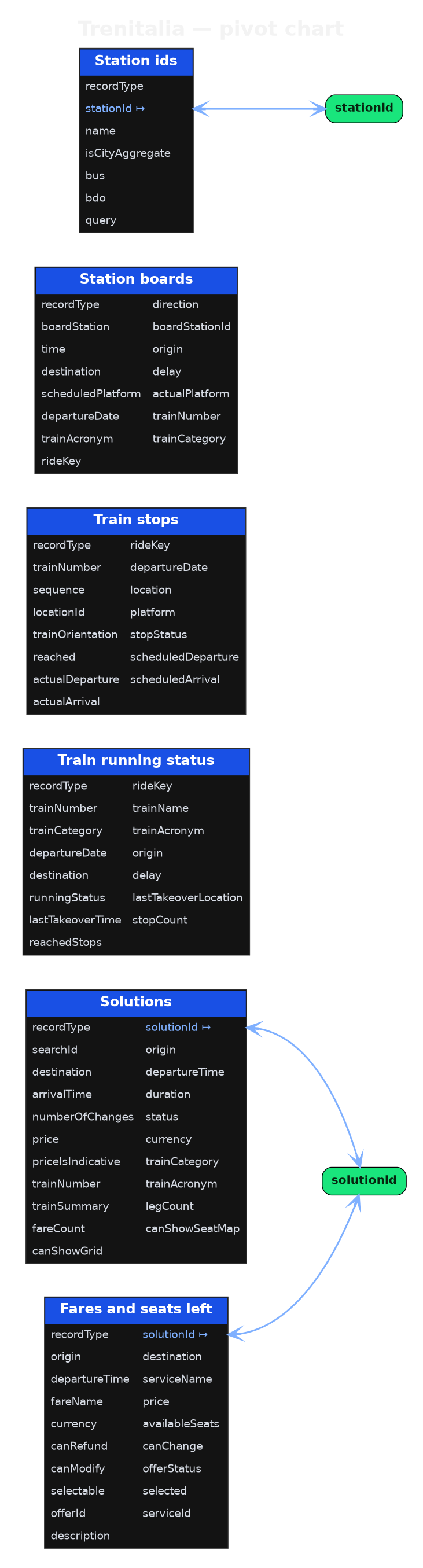
Trenitalia Fares and seats left columns, generated from the actor dataset schema.
Read it →Trenitalia Solutions columns, generated from the actor dataset schema.
Read it →Trenitalia Station boards columns, generated from the actor dataset schema.
Read it →Trenitalia Station ids columns, generated from the actor dataset schema.
Read it →Trenitalia Train running status columns, generated from the actor dataset schema.
Read it →Trenitalia Train stops columns, generated from the actor dataset schema.
Read it → Apify Actors by rl1987